
What is a horse passport?
A horse passport is a fundamental equine identification document, serving a role analogous to an identity card for humans. It is a single lifetime identification document that records the identity of a horse and contains information about the horse. It confirms the animal’s identity, containing all the most important information about the horse and its history, including details concerning the horse’s health. The horse passport accompanies it throughout its entire life, and each horse has a Unique Equine Life Number revealed in the passport.
Since July 1, 2009, the electronic identification of horses through microchip implantation has been mandatory, which has significantly improved the animal identification process. The passport contains comprehensive information about the horse, including detailed data about its origin, successive owners, and a unique identification number.
This document also contains a precise description of the horse’s external features, such as coat colour and distinctive markings. The Polish Noble Half-Blood horse and the Polish Coldblood are examples of breeds that are identified and registered by the Polish Horse Breeders Association.
An important part of the passport includes information regarding the horse’s health status, administered vaccinations, and laboratory test results, which allows for complete control over the animal’s medical history.
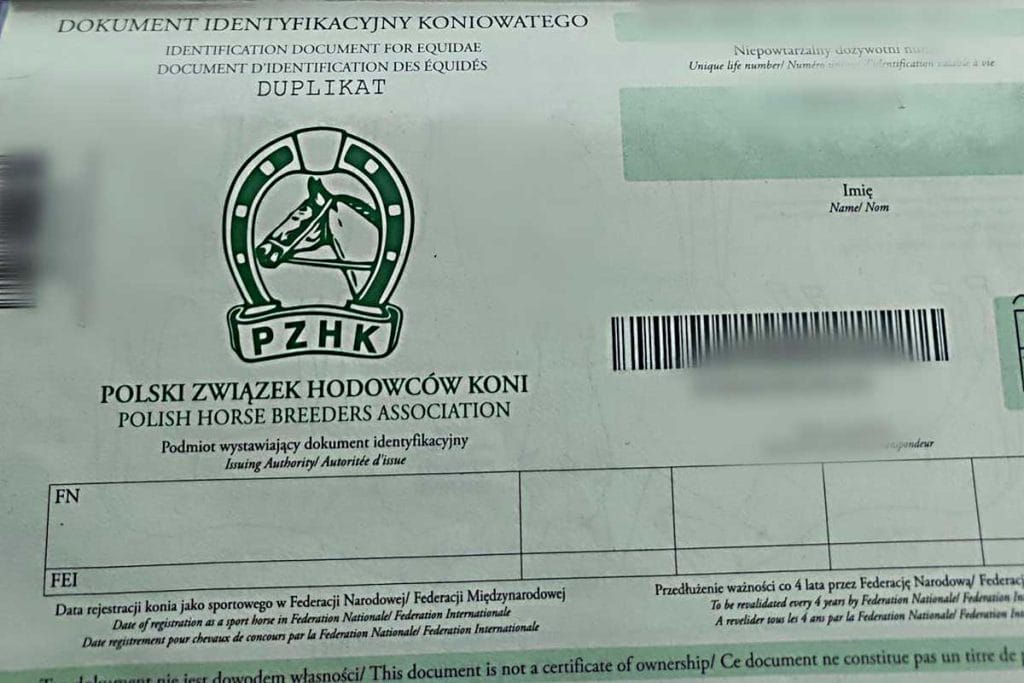
How to obtain an equine passport?
The process of obtaining a horse passport is strictly regulated and supervised by appropriate breeding associations. After registering the horse, the passport is issued and delivered to the owner, which is a crucial legal and administrative aspect of horse breeding.
Depending on the horse’s breed, documents are issued by relevant organisations, such as the Polish Horse Breeders Association or foreign breeding associations like the Oldenburg or Westphalian. To trade a horse, it is necessary to obtain a passport that documents its origin, health, and change of ownership, which is crucial for the safety of both people and animals.
Passport issuance procedure
The process of obtaining a horse passport proceeds in the following stages:
- Submission of an application to the Regional Horse Breeders Association
- Inspecting the animal
- Issuance of the passport, which contains information about the horse’s origin, which must be documented with at least a mare covering certificate
After completing the procedure, the owner can collect the passport in person at the Regional Horse Breeders Association office or receive it by registered post. Similar procedures apply to other horse breeding associations.
Sections of a horse passport
A horse passport consists of eleven precisely defined sections, each fulfilling an important role in identifying and documenting the animal’s history:
- Section I: Contains the horse’s identification data, including detailed written and graphical descriptions
- Section II: Dedicated to the horse’s certificate of origin
- Section III: Document owners, taking into account all ownership changes
- Section IV: Records identity checks of the horse
- Section V: Contains entries regarding vaccinations against equine influenza
- Section VI: Record vaccinations against other diseases
- Section VII: Documents laboratory tests
- Section VIII: Basic validity of the identification document
- Section IX: Contains information about administered medicinal products
- Section X: Basic health requirements
- Section XI: Chestnuts (characteristic marks on the horse’s legs)
For the horse owner, particularly important are the sections of the equine passport concerning identification (I). Section II is also very important, as it allows the owner to decide whether they wish their animal to be eligible for human consumption after slaughter, even in the distant future, or if they do not accept this. The section regarding ownership history (III), vaccinations (V and VI), and administered medications (IX) are also crucial, as they require regular updates and directly affect the possibility of travelling with the horse and its use.
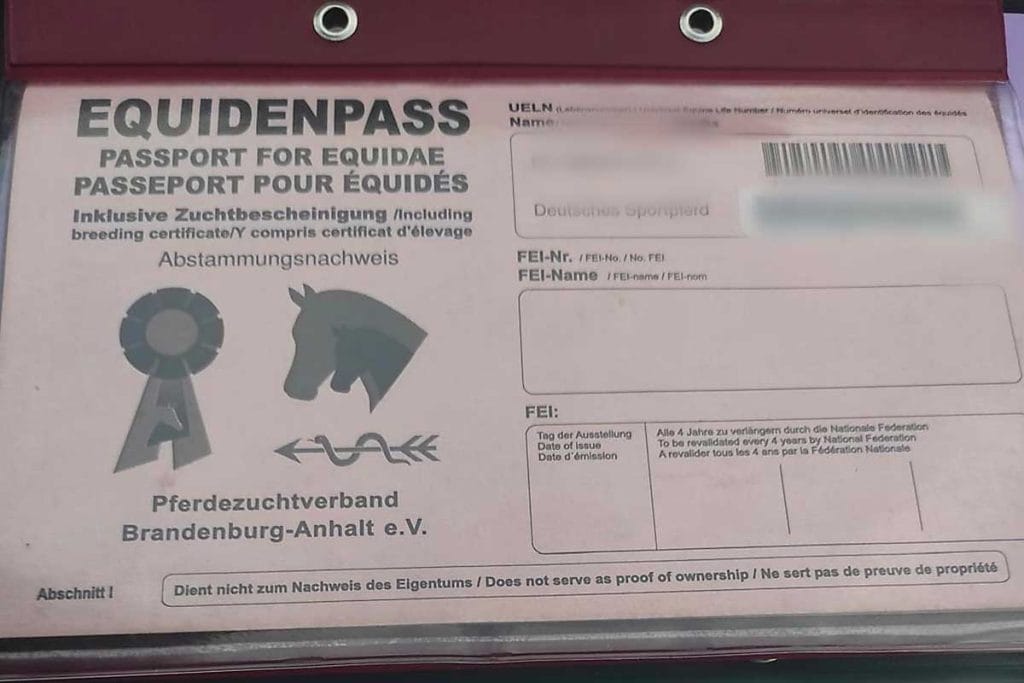
Changing horse ownership
In case of a change in horse ownership, the new owner is obligated to report this change within 7 days. Both the previous and new horse owners must provide necessary documents and register the change in the horse’s passport. Appropriate documentation and data about subsequent horse owners must be presented.
Horse owner’s responsibility for the horse’s health information
The owner bears full responsibility for ensuring appropriate veterinary care for their horse. Their duties include:
- Ensuring proper care and living conditions
- Making decisions regarding the future purpose of the horse at every stage of its life (including the possibility of use for consumption purposes). In case of treating the horse with medicines, the owner must be aware that some medications may disqualify the horse from human consumption.
- Ensuring regular vaccinations and laboratory tests
- Ensuring proper electronic identification through transponder implantation
The horse passport is therefore not merely a formal document. Still, it constitutes a comprehensive tool for supervising the health and safety of horses, enabling effective control of their movement and changes in ownership.
Sports horse passports
For horses competing in international sporting competitions, it is necessary to obtain an additional document – the FEI passport. This abbreviation stands for International Federation for Equestrian Sports (in French: Fédération Équestre Internationale) – the global organisation responsible for equestrian sport. The FEI passport for a horse is mandatory if the horse is to participate in international competitions organised by the FEI. This passport contains detailed information about the animal, including identification data, health status, and vaccination records.