
Transporting horses involves moving an animal from point A to point B. Safety, comfort, and practicality are paramount for horse owners, riders, and professionals involved in equine transport. Ensuring the well-being of both the driver and the animals during the journey necessitates appropriate accessories and horsebox designs tailored to drivers’ needs.
So, how does one select the right tool for the job? This article examines horse trailers and horseboxes, discussing their types, structural features, and legal and practical considerations.
Types of Horse Transport Vehicles
Horse Trailers
Trailers are the most popular choice among horse owners, especially those transporting horses occasionally or over shorter distances. Their design focuses on several key elements:
Construction and Materials
Modern trailers boast thoughtful construction, where every component contributes to the horse’s safety and comfort during transit, including innovative features like independent suspension, ventilation, and safety systems.
Roof: Usually made from polyester reinforced with fibreglass or aluminium, providing adequate thermal insulation and ventilation.
Floor: It is typically made of aluminium and covered with a special non-slip layer or high-quality rubber. Some models include additional shock absorbers to reduce vibrations during travel.
Walls: These are constructed from durable materials like aluminium or laminate, often with added thermal insulation. Walls must be properly contoured and free from sharp edges.
Sizes and Capacity
Various trailer options are available on the market:
- Single-horse trailers: Ideal for owners of individual horses, compact, and easier to manoeuvre. Width is a vital parameter affecting transport comfort and safety. These trailers are often chosen for their low unladen weight, allowing them to be towed by smaller vehicles. Their popularity also stems from not requiring a higher category driving licence.
- Two-horse trailers: The most popular choice, offering the ability to transport two horses or more, with space for one. These trailers can have an additional tack room to accommodate extra equestrian equipment.
Additional Equipment
Modern trailers can be outfitted with numerous amenities. Additionally, equipment facilitating the horse loading process, such as rear or side ramps and handles and locks, ensures convenience and safety during transport:
- Ventilation system with adjustable vents
- Windows and hatches providing light and fresh air
- Tack room with space for equestrian gear
- Camera systems monitor horse behaviour during transport
Horseboxes
Horseboxes are professional vehicles dedicated to horse transport, particularly useful for regular journeys over longer distances. The cost of such vehicles from reputable manufacturers is not low; however, their usage is much simpler and more convenient compared to trailers.
Types of Horseboxes
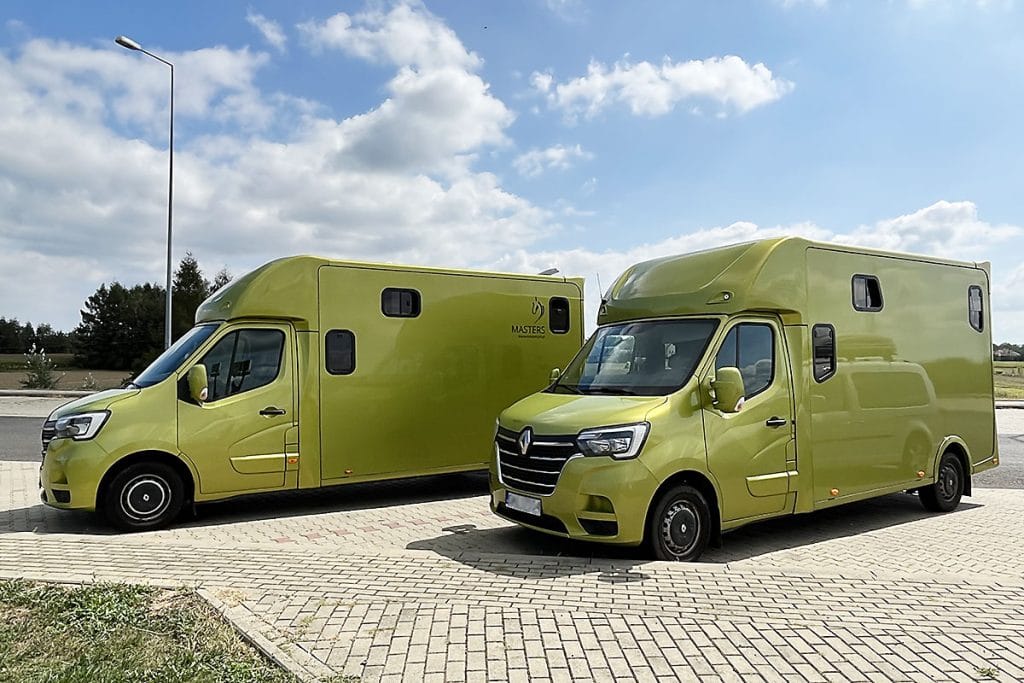
Delivery vans with custom builds – A popular solution for smaller stables and private owners. The Renault Master is one of the leaders in the horsebox industry. With the right custom builds and the potential for easy upgrades, this delivery vehicle can be integrated with a comfortable space for the horse. Additionally, horsebox manufacturers provide solutions that ensure comfort for the transported animals and enhance human comfort by offering rest areas with installed bunks. This is especially important on long international routes.
Trucks – A professional solution for larger stables and transport companies. This is one of the best options for horse transport. Unfortunately, the cost of purchasing such a vehicle is very high, with prices reaching up to 2–3 million PLN. Furthermore, driving such vehicles requires a category C or C+E driving licence.
However, these vehicles offer a very high level of travel comfort for humans and horses. Thanks to their advanced features, they are suitable as living quarters for riders and their grooms for 2–3 weeks during competitions. The equipment in these lorry-style horseboxes would rival a high-end camper van. This often includes numerous sleeping spaces, a well-equipped kitchen, a bathroom with a shower, stationary heating, and air conditioning to maintain thermal comfort in cold and hot weather. The most expensive lorry horseboxes may include a comprehensive electrical system with a generator, a coffee machine, and a washing machine.
Factors Affecting the Choice
Horse’s Needs
When choosing a means of transport, one should consider that modern solutions, such as independent suspension or ventilation, provide horses with high comfort during transport:
- Size and breed of the horse – larger horses require more spacious trailers
- Temperament – nervous horses may need more space and better ventilation. To protect against unforeseen situations, horse transporters are often equipped with stallion partitions. This construction features a built-in grate, so that the horse cannot jump into the luggage area.
- Health condition – horses after injuries or pregnant mares require special transport conditions
Frequency and Distance of Travel
The choice of transport should take into account that high-quality equipment allows for easy and comfortable horse transport:
- How often will we transport the horse
- What distances do we plan to travel
- Whether we will cross national borders
Financial Aspects
Cost comparison (approximate prices in PLN):
| Type of transport | New price | Used price |
| Single-horse trailer | 20,000 – 40 000 | 15,000 – 25,000 |
| Two-horse trailer | 35,000 – 90,000 | 20,000 – 40,000 |
| Horse van (delivery) | 250,000 – 350,000 | 100 000 – 200 000 |
| Horse lorry (heavy truck) | 1,000,000+ | 500,000 – 800,000 |
Horse Transport Safety
Importance of Safety During Horse Transport
A horse is a unique animal—large, sensitive, and prone to stress. Transport can be a significant challenge for them, so choosing the right equipment is crucial. Safe transport is a comfort for the animal and peace of mind for the owner.
Horse Preparation
Key elements of preparing a horse for transport:
- Systematic loading training and familiarising the horse with transport for safety and comfort
- Using appropriate transport protectors
- Checking the technical condition of the vehicle before the journey
Safe Driving
During transport, one should:
- Adjust speed to road conditions
- Avoid sudden braking and acceleration
- Take regular breaks on longer routes
Legal Aspects
Necessary documents and permits:
- Appropriate category driving licence
- Horse passport and veterinary documents
- In the case of commercial transport, a licence for animal transport, registered business activity being the basis for legal operation, approval of means of transport issued by the district veterinary officer, a TRACES transport document, and a health certificate.
Essential Accessories for Horse Transport
Horse transport requires appropriate equipment to ensure animal safety and comfort during the journey. Basic accessories include transport protectors, ventilation systems, and tack rooms. All these elements should be made of high-quality materials, guaranteeing durability and reliability.
Before transporting a horse, one should ensure the trailer is completely equipped, which significantly affects the safety and comfort of the transported animal. Properly selected transport accessories are the foundation of responsible horse transport.
Pre-purchase Checklist
- Check the technical condition of the vehicle
- Control documentation
- Assess cargo space
- Verify safety systems
- Check service history
- Consult an expert (e.g. veterinarian)
Summary
Choosing the right means of transport for a horse should be made considering many factors. The most important thing is the horse’s safety and comfort, but practical aspects such as maintenance costs or frequency of use must also be considered. It is worth taking the time to thoroughly familiarise oneself with the available options and consult with experienced horse owners or industry professionals.
Let’s remember that horse transport is not just the vehicle itself—it’s an entire process that requires proper preparation, knowledge, and experience. Investing in an appropriate means of transport is an investment in the safety and comfort of our horses.
Entrusting horses for transport is a very responsible decision for every owner, so one should choose proven carriers with extensive experience. This gives great certainty that your horse will be transported by a safe means of transport by specialised drivers, and you as the owner will avoid unnecessary stress and unexpected, large expenditures of money for possible treatment of the horse in a clinic.w klinice.