
If you’re involved in animal transport, you probably know that cleanliness is fundamental. However, you may not realise what a significant difference proper washing and disinfection of vehicles can make. In this article, I’ll explain why this is so important and how to do it properly.
Why Should You Care About Vehicle Hygiene?
Animal Health First and Foremost
A dirty animal transport vehicle is a real bacteriological bomb. Organic matter accumulates in trailer corners, providing breeding grounds for bacteria, viruses, and other harmful organisms, as well as unpleasant odours. These can infect animals during subsequent loading. Sick animals during transport not only cause suffering and major problems but also represent significant financial losses.
Every vehicle used for transporting horses and animals that isn’t regularly cleaned can become a source of infections. Young animals and those weakened by transport-related stress are particularly vulnerable.
ZClient Trust and Safety
Breeders and consumers are increasingly paying attention to how animals are treated. When they see that you maintain the cleanliness of your transport vehicles, they immediately know you’re a professional. This builds reputation, and a good reputation translates to more contracts and higher industry standards in animal transport.
What Are the Risks?
If you neglect cleaning and disinfection, you may unknowingly spread diseases such as:
- Foot-and-mouth disease
- African swine fever
- Salmonellosis
These pathogens can survive for long periods in organic residue on floors, ramps, or partitions. They then transfer to the next animal—and you have a problem.
How to Properly Clean Animal Transport Vehicles
Choosing Cleaning Products
Simply hosing down with water and calling it done isn’t enough. Effective disinfection requires two types of products:
- Cleaning agents (detergents) – remove dirt and organic matter residue
- Disinfecting agents – kill microorganisms
Choose preparations that work against a broad spectrum of pathogens but are safe for animals. The disinfecting agent should be effective against bacteria and viruses.
Step-by-Step Vehicle Cleaning Procedure
- Remove most visible organic matter – dispose of everything possible: faeces, straw, feed remnants
- Initial rinse – remove loose contamination
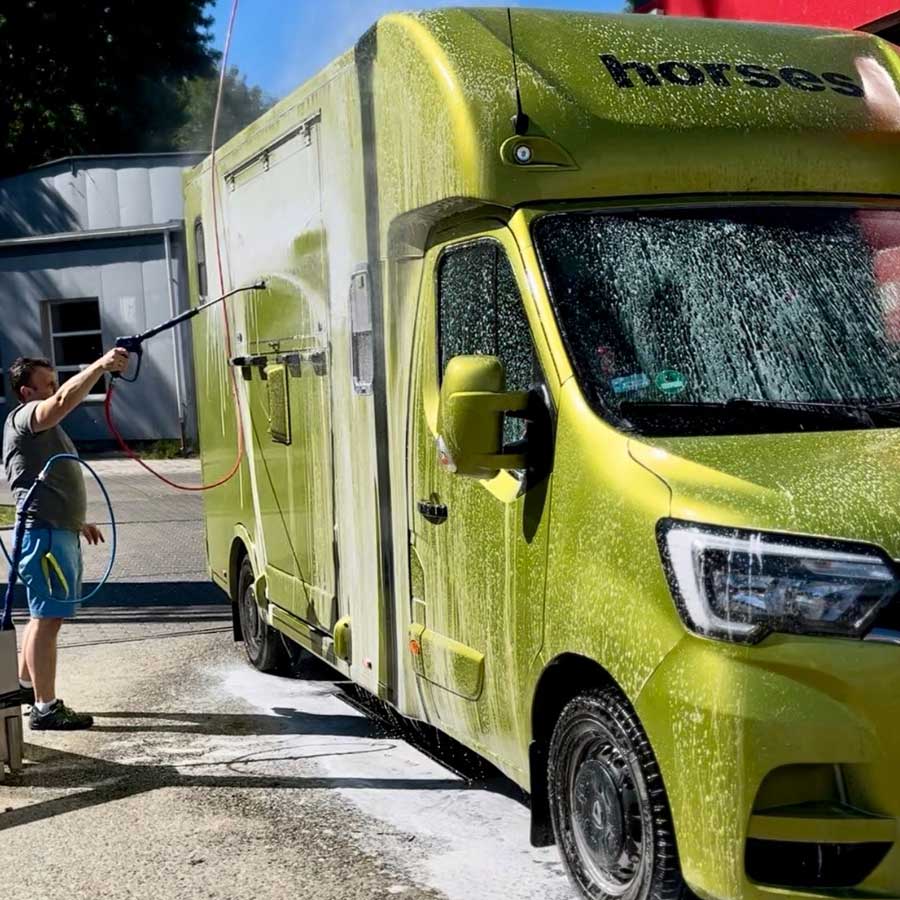
- Wash with detergent – thoroughly clean floors, walls, partitions, ramps
- Rinse with pressurised water – remove detergent residue
- Apply disinfecting agent – apply preparation according to instructions
- Contact time – leave for the appropriate time (check label)
- Final rinse and drying
Effectiveness Assessment – Cleaning and Disinfection Evaluation
From time to time, it’s worth checking whether your cleaning actually works. You can take swabs and have them commissioned for microbiological validation by a laboratory. If the results aren’t satisfactory, you need to change the procedure.
Who Is Responsible for What in Transport?
Carriers and Transport Vehicle Management
You are responsible for maintaining the condition of your vehicle. Nobody else will do this for you. Every horse trailer and trailer used for horse transport must be cleaned and disinfected after each unloading.
You must develop procedures, train employees, and ensure that everything is done in accordance with the rules. Proper management also includes cleaning the driver’s cabin, which can be a source of aerosol contamination.
Inspections and Standard Verification
Expect inspections at slaughterhouses, by veterinarians, and occasionally by authorities. Inspectors will check whether transport vehicles have been properly prepared for animal transport. It’s better to be prepared than to explain later why the vehicle wasn’t cleaned and disinfected according to regulations.
Horse Transport – Special Horse Transport Requirements
Racing and Sport Horses
Horse transport, especially valuable sport horses, is completely different from transporting other animals. A racing, dressage, or jumping horse often represents an investment worth hundreds of thousands of dollars. Owners very carefully check the conditions in which their animal will be transported.
Horses are very sensitive to stress and environmental changes. A dirty trailer can not only infect a horse but also affect its performance in sports. If a horse gets sick before competitions due to an improperly cleaned vehicle, you can forget about cooperation with that client.
Special Requirements for Horse Loading
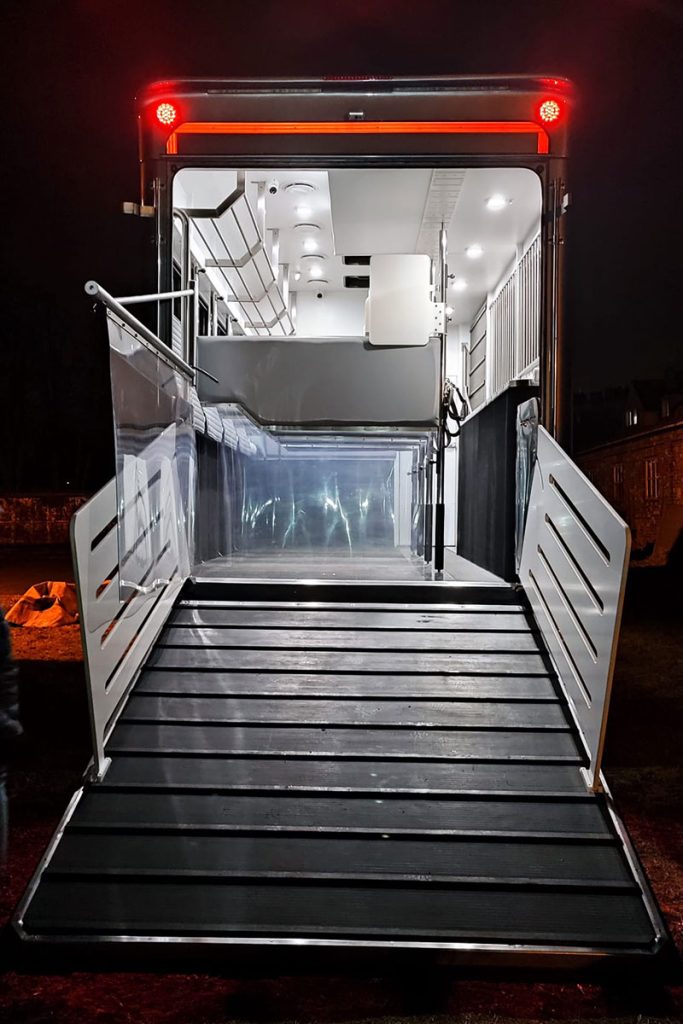
Vehicles intended for horse transport must meet the highest sanitary standards. When transporting horses, you must pay attention to:
- Thorough vehicle floor cleaning – horses are sensitive animals
- Ventilation system disinfection – horses are susceptible to respiratory diseases
- Cleaning ties and restraints that have direct contact with the animal
- Removing all traces of previous animals
Sport horse owners often require certificates confirming that the vehicle was cleaned before each transport. Vehicles adapted for this purpose must be disinfected every time. In every Master’s Global vehicle used for horse transport, there is a disinfection logbook. The information recorded includes the name of the person performing the disinfection, the date of the procedure, the method of disinfection preparation used, and the signature.
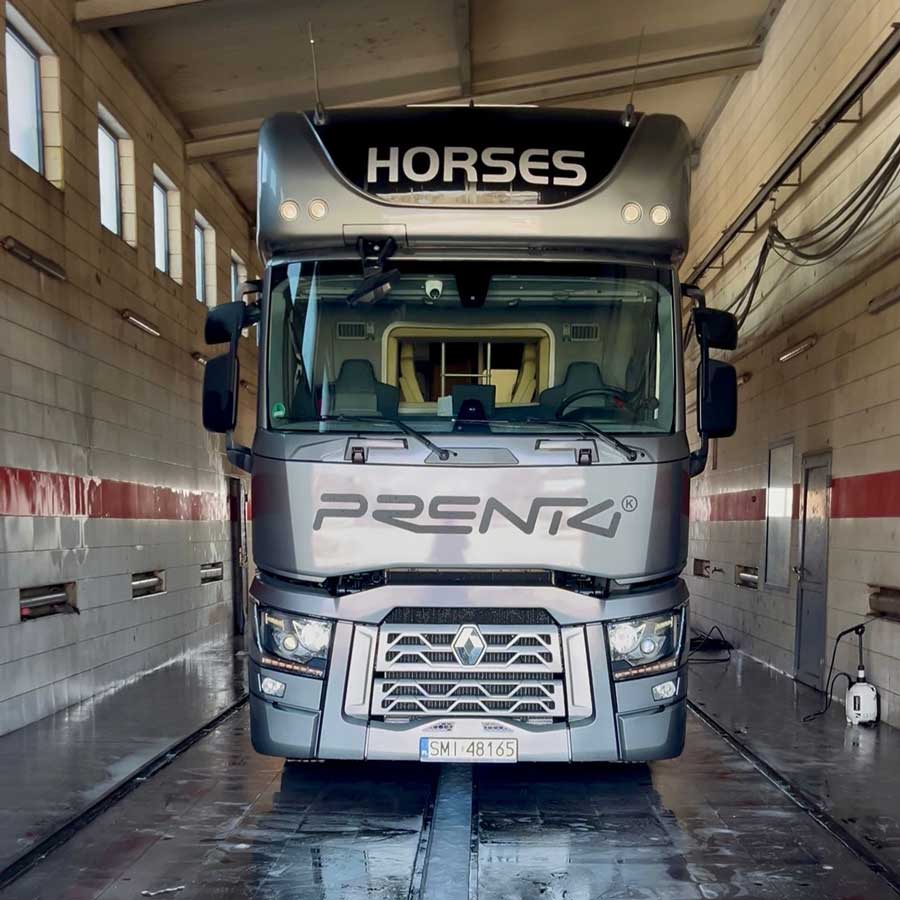
At Masters Global, we alternately use two very popular disinfecting agents: Virkon S and Ecocid S. Additionally, we use a professional wash station that also disinfects our vehicles.
Hygiene in Different Animal Transport
Species-Specific Requirements
Each animal has its own requirements. In pig transport, the risk of infection increases, so transport hygiene must be maintained at the highest level. Vehicles intended for pig transport require special attention due to their susceptibility to infectious diseases.
Vehicle Types – Trailer vs. Truck
Regardless of whether you use a trailer or a truck with bodywork, the principles remain the same. It’s important that the vehicle is designed to be easily cleaned. Avoid unnecessary nooks where dirt can accumulate.
The floor should be non-slip but smooth enough to be thoroughly washed. Walls and partitions should also be easy to clean—preferably made from materials that don’t absorb odours and liquids.
Most Effective Biosecurity Measures
Wash Station as System Element
A professional wash station equipped with the appropriate equipment significantly increases the effectiveness of disinfecting agents. Using pressurised water allows better removal of biofilms and contamination from hard-to-reach places in transport vehicles.
Disease Transmission Prevention
The primary goal of disinfecting transport vehicles is to prevent the transmission of pathogens between different farms. When transporting animals from various breeding facilities, each transport should be preceded by a thorough cleaning of the transport vehicles.
Business Benefits
More Money
A clean vehicle commands a higher service price. The simple rule “first impressions matter” applies perfectly here. Clients will gladly pay more if they know you prioritise the care of your equipment and biological safety. Especially in expensive animal transport, the price difference can be really significant. None of us horse owners would want our horses travelling in dirty and smelly conditions, thereby exposing them to additional dangers.
Regular Clients and Competitive Advantage
A satisfied client is a client who returns. A recommendation from a satisfied breeder is worth more than any advertisement. Well-executed service markets itself.
There are an increasing number of companies in the animal transport market. To stand out, you must offer something more than the competition. High standards of vehicle cleaning and disinfection can be that something.
Reputation and Certificates
In today’s world, a company’s reputation spreads rapidly—through the internet, social media, and industry forums. One dissatisfied client can cause you problems. But one satisfied client can bring you several new ones.
Quality certificates, positive veterinarian reviews, breeder recommendations—all of this builds your company’s credibility. And credibility translates to contracts and the ability to transport valuable animals.
What to Remember
Cleaning and disinfection in animal transport isn’t a whim—it’s the foundation of running a business and caring for animals entrusted for transport. Investment in proper vehicle cleaning procedures pays back quickly through higher service quality and client satisfaction.
We are well aware that responsibility lies with the carrier. Nobody else would care for your vehicle like you do. Properly maintained equipment is the foundation of a successful business in animal transport.
Don’t skimp on cleaning and disinfection products—it’s really a small cost compared to potential losses that transport hygiene neglect can bring. It’s better to prevent damage than to repair it later and lose client trust.